Jay Peak Trades Weed Whackers for Hooves in New Trail Maintenance Pilot Program
JAY PEAK, Vt. – [August 11, 2025] – This fall, Jay Peak Resort is swapping the buzz of gas-powered weed whackers for the quiet munch of Vermont-raised goats and sheep. In a first-of-its-kind pilot for the resort, the animals will graze roughly 130 acres of ski and Nordic trails throughout September, replacing a portion of the resort’s annual fall mowing operation.
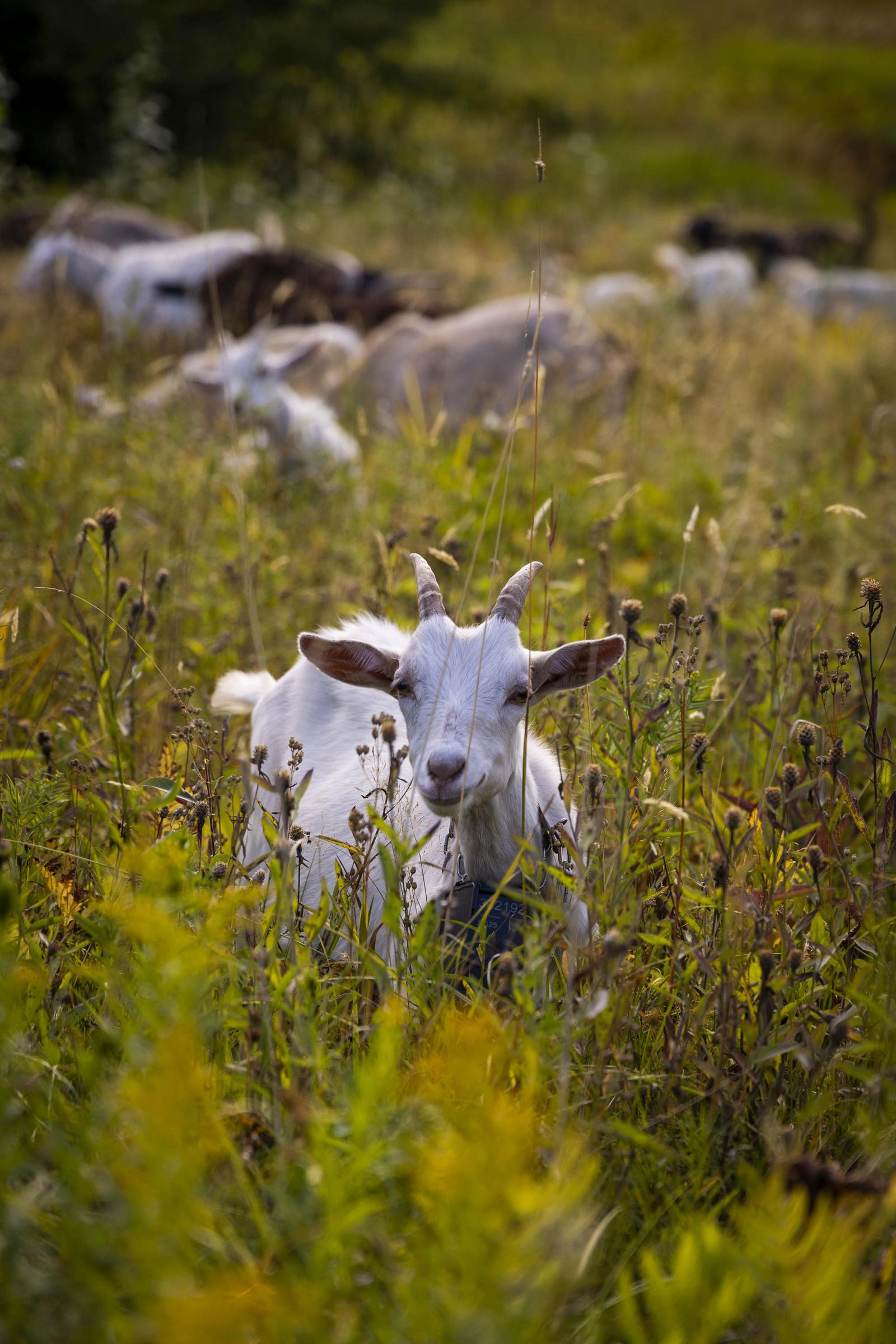
Traditionally, Jay Peak mows about 340 acres of trails and glades each September and October, using a crew of 10 seasonal workers armed with gas-powered trimmers. This year, Jay has contracted a Vermont-based farmer who will bring a herd of goats and sheep to handle part of the job. Outfitted with radio collars connected to a cellular-powered geofencing system, the animals will rotate through two-acre sections every two days, grazing the vegetation down to the target height of six inches. A trained guard dog will stay with the herd overnight to deter coyotes, bears, and other predators.
Their mission? Goatscaping the mountain. “Goatscaping” is a centuries-old technique for natural landscaping that relies on goats’ indiscriminate appetite for nearly anything leafy and green. Their hardy stomachs can digest plants other animals can’t— including poison ivy, sumac, and other invasive or nuisance growth—without harm. This organic, chemical-free approach is both environmentally friendly and highly effective, making it a sustainable alternative to weed-killing sprays.
“This is as much about exploring better, lower-impact ways to care for the mountain as it is about tradition,” said Andy Stenger, Director of Mountain and Base Area Operations. “If the goats and sheep can do the work without heavy fuel use—and without us needing to haul crews up the hill every day—that’s a win for us and the mountain.”
While optimistic, the resort acknowledges the experiment comes with unknowns. If the animals don’t meet vegetation targets, the mowing crew will resume in October to complete the job. If the pilot succeeds, Jay Peak hopes to expand the grazed acreage in future seasons. Regardless of outcome, planning for winter 2025+26 operations will not be impacted by how the trails are ultimately cleared.
The approach offers multiple benefits: reducing fossil fuel consumption, cutting back on noise and emissions during the fall prep season, and supporting Vermont agriculture through direct partnerships with local farmers.
The goats and sheep are expected to be on-site for the full month of September. Guests and passholders may spot them from select trails, though they’ll remain within geofenced areas and under supervision at all times.
For more information about Jay Peak’s environmental initiatives, visit jaypeakresort.com.
###
Jay Peak Resort is a four-season destination in Northern Vermont, located near the Canadian border and about 60 miles north of Burlington. While best known for its snowfall and extensive winter terrain, Jay Peak comes to life in the warmer months with a wide range of summer activities and facilities. The resort features Vermont’s only indoor waterpark—complete with a retractable roof for all-weather access—alongside an 18-hole championship golf course, heated outdoor pool, multi-purpose turf fields, disc golf, and scenic Aerial Tram rides to the 4,000-foot summit. Summer also brings music festivals, events, and camps, all anchored by a growing lineup of indoor and outdoor recreation.