Graze 'em Jay
Published October 2nd, 2025
Chew Crew Meet Trail Crew
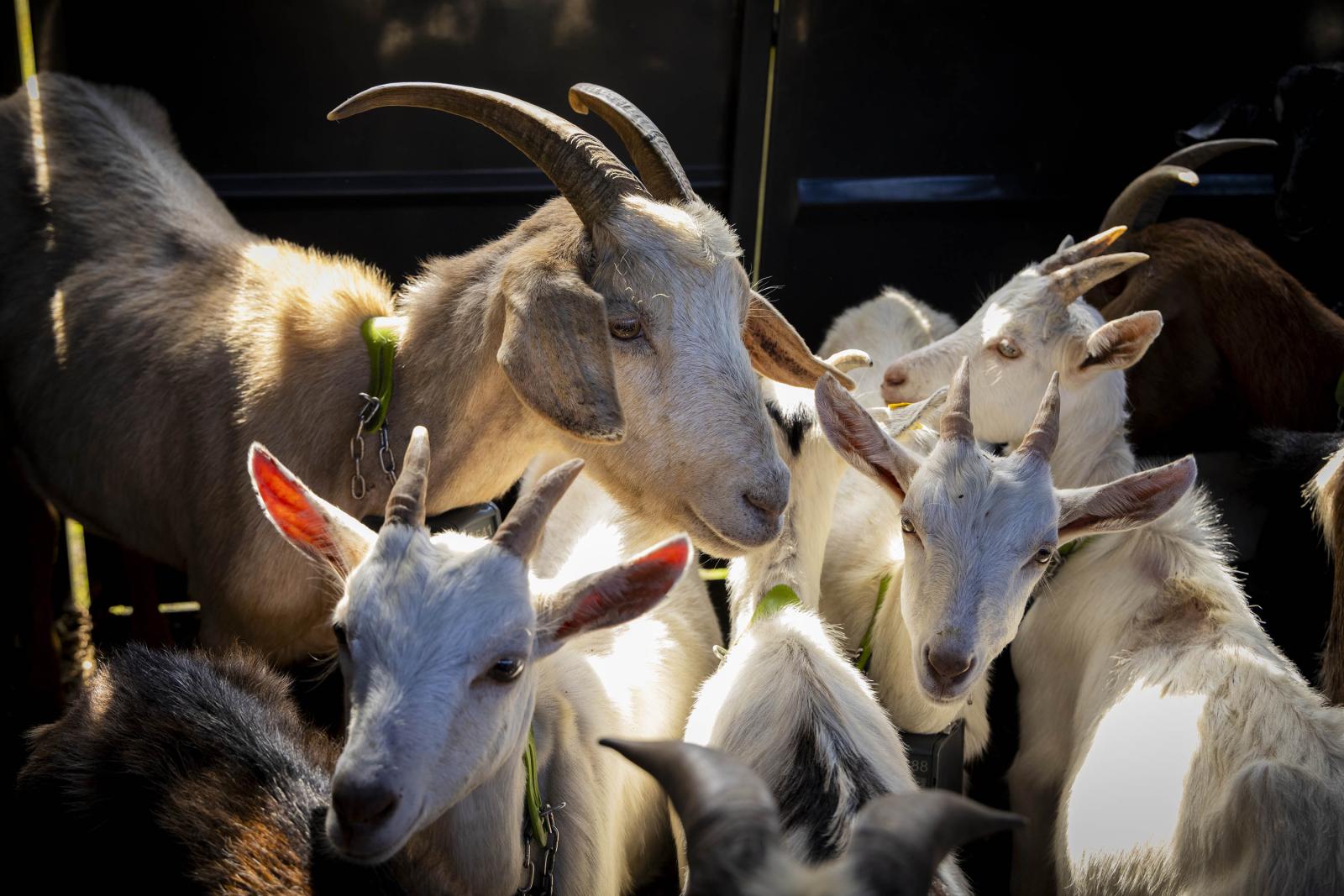
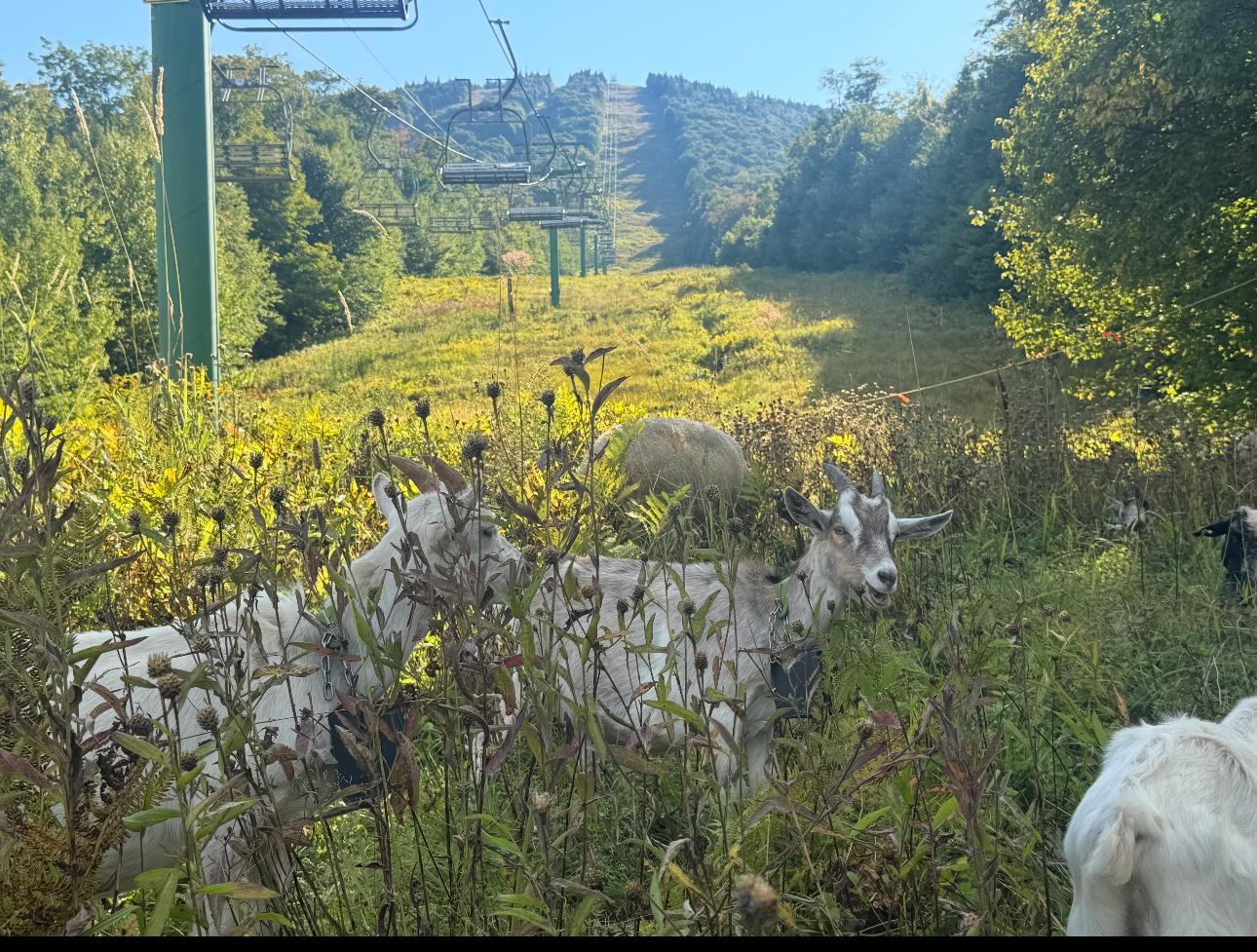
This fall, the hum of weed whackers was supplemented by something a lot softer, and furrier. Through September and early October, a herd of Vermont-raised goats and sheep grazed their way into our hearts and across our ski and Nordic trails, taking over part of the annual mowing job that usually calls for fuel, crews, and a whole lot of noise.
They’re not freelancing. Each animal wears a radio collar connected to a cellular-powered geofencing system that keeps them working two acres at a time, rotating every couple of days. There’s even a guard dog on duty at night, because, well, coyotes and goats don’t mix.

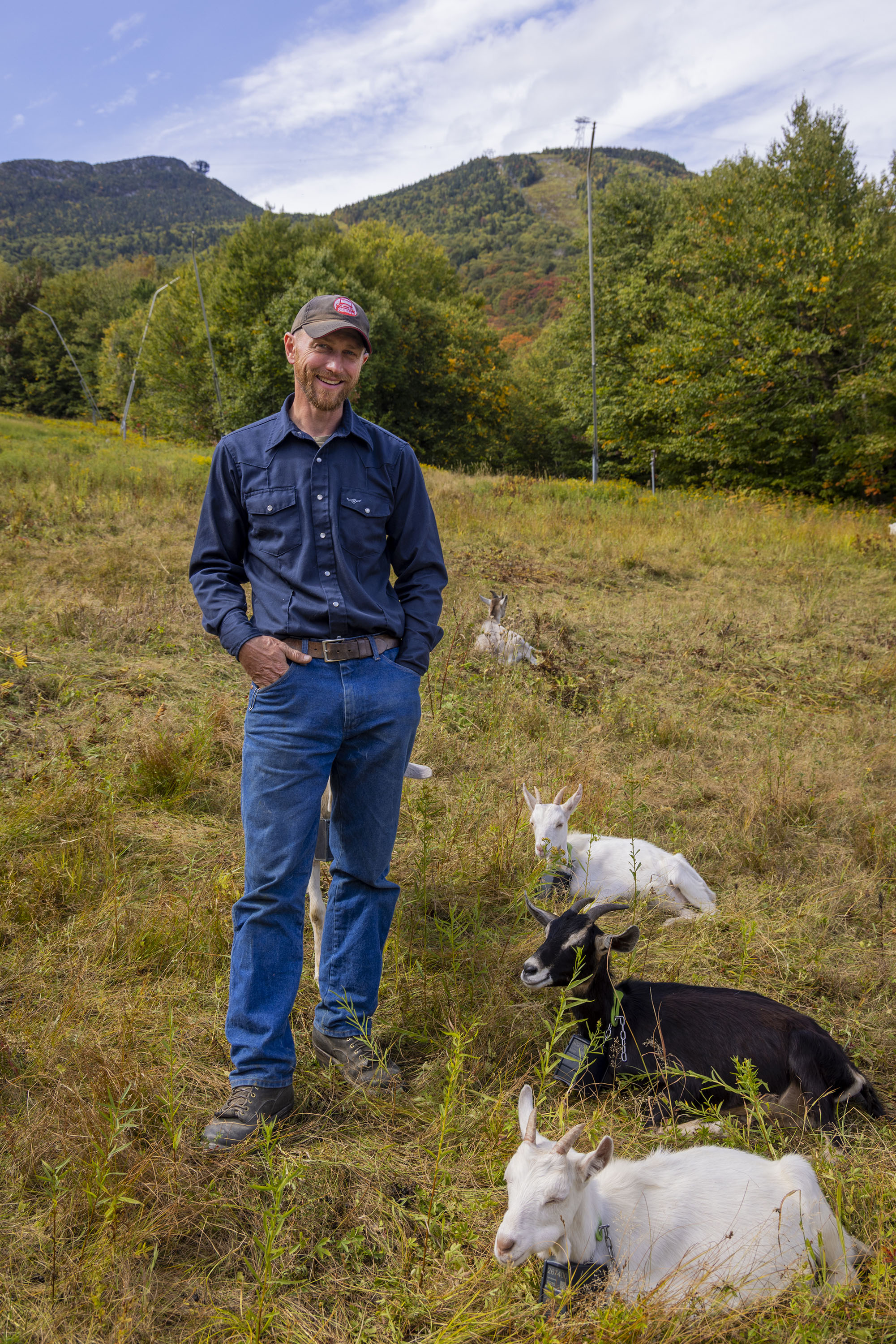
Meet Adam Ricci of Cloud Brook Farm
Adam Ricci is the farmer behind Cloud Brook Farm & Grazing. Using goats, sheep, and carefully managed rotational grazing, Adam has built a farm rooted in regeneration, land stewardship, and old-school problem solving. His animals help restore overgrown landscapes, manage invasive species, and improve soil health, all without heavy machinery or chemicals. Based in Barnet, in Vermont’s Northeast Kingdom, Cloud Brook Farm is a reflection of Adam’s hands-on approach: thoughtful, practical, and deeply connected to the land, with a belief that the best solutions are often the simplest ones — just let the animals do what they’ve always done best.

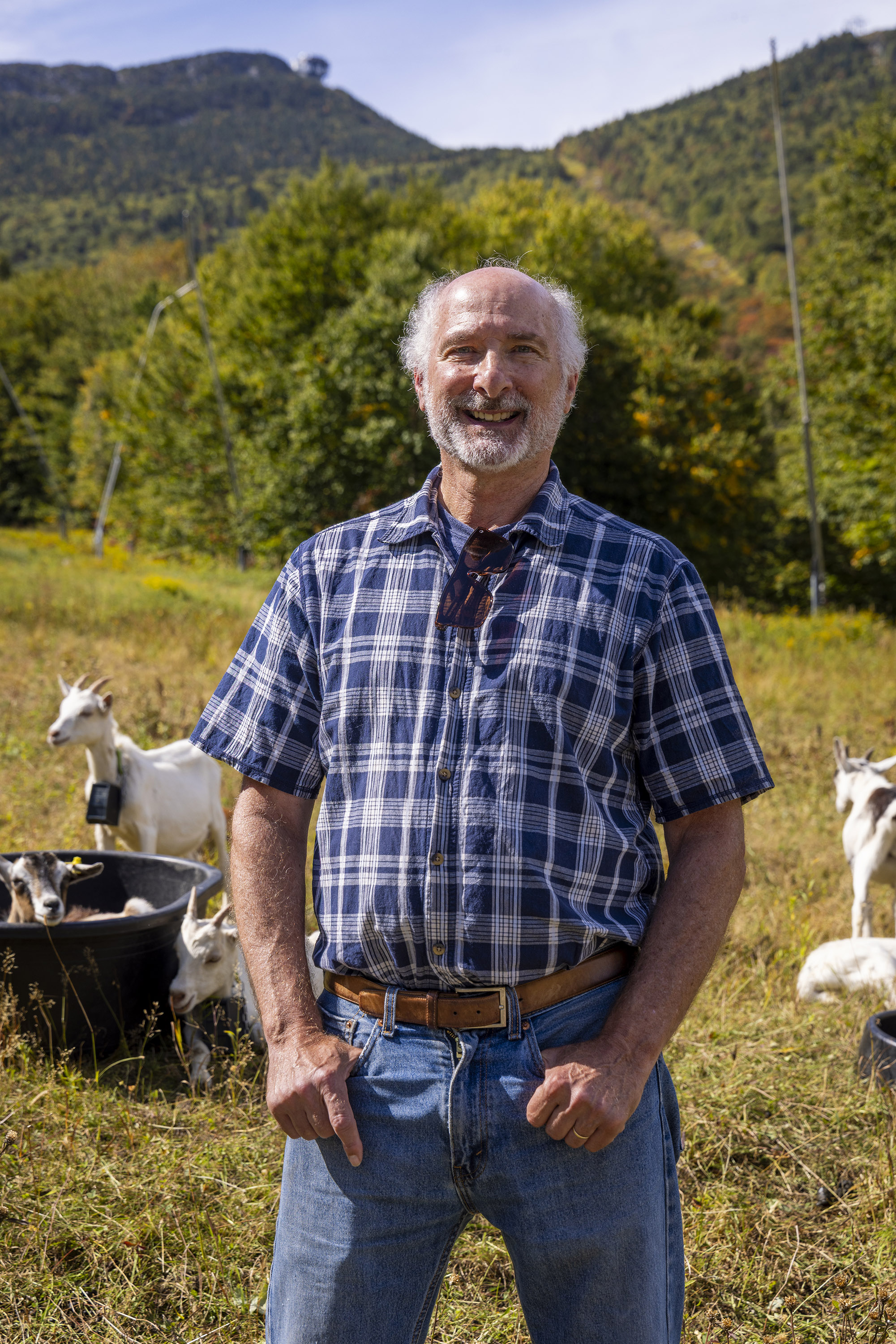
Meet Dan Smith of Agritech Institute For Small Farms
Dan Smith is the co-founder and long-time guiding force behind the Agritech Institute for Small Farms, a Montpelier-based nonprofit helping folks on the ground bridge the gap between traditional farming know-how and the promise of modern agritech. Dan has spent decades in agricultural circles, from legislative counsel in the Vermont Statehouse to founding the Northeast Dairy Compact Commission. At the Institute, he’s focused on giving small farms the tools and support they need to adapt, thrive, and contribute to both local food systems and climate resilience. Through applied research, technical collaborations, and pilot programs, such as testing GPS-enabled collars and virtual fencing. These collars talk to smartphone apps to set invisible boundaries for cattle, goats, and sheep, letting farmers redraw pasture lines in minutes instead of setting posts and wire by hand.
In Dan’s view, small farms aren’t relics; they’re essential pieces of a future where smart tools and good stewardship go hand in hand.
Why Goats?
Because they’ll eat what nothing else wants—poison ivy, sumac, invasive weeds, all of it. It’s called goatscaping, and it’s been around for centuries. We like it because it’s organic, chemical-free, and just about the lowest-impact way to clear trails short of doing nothing at all. Normally, fall prep means 340 acres of trimming with crews of 10 seasonal workers hauling heavy equipment up and down the hill. That uses a lot of fuel. This pilot program helps cut back on emissions, reduces noise, and supports Vermont farmers in the process.